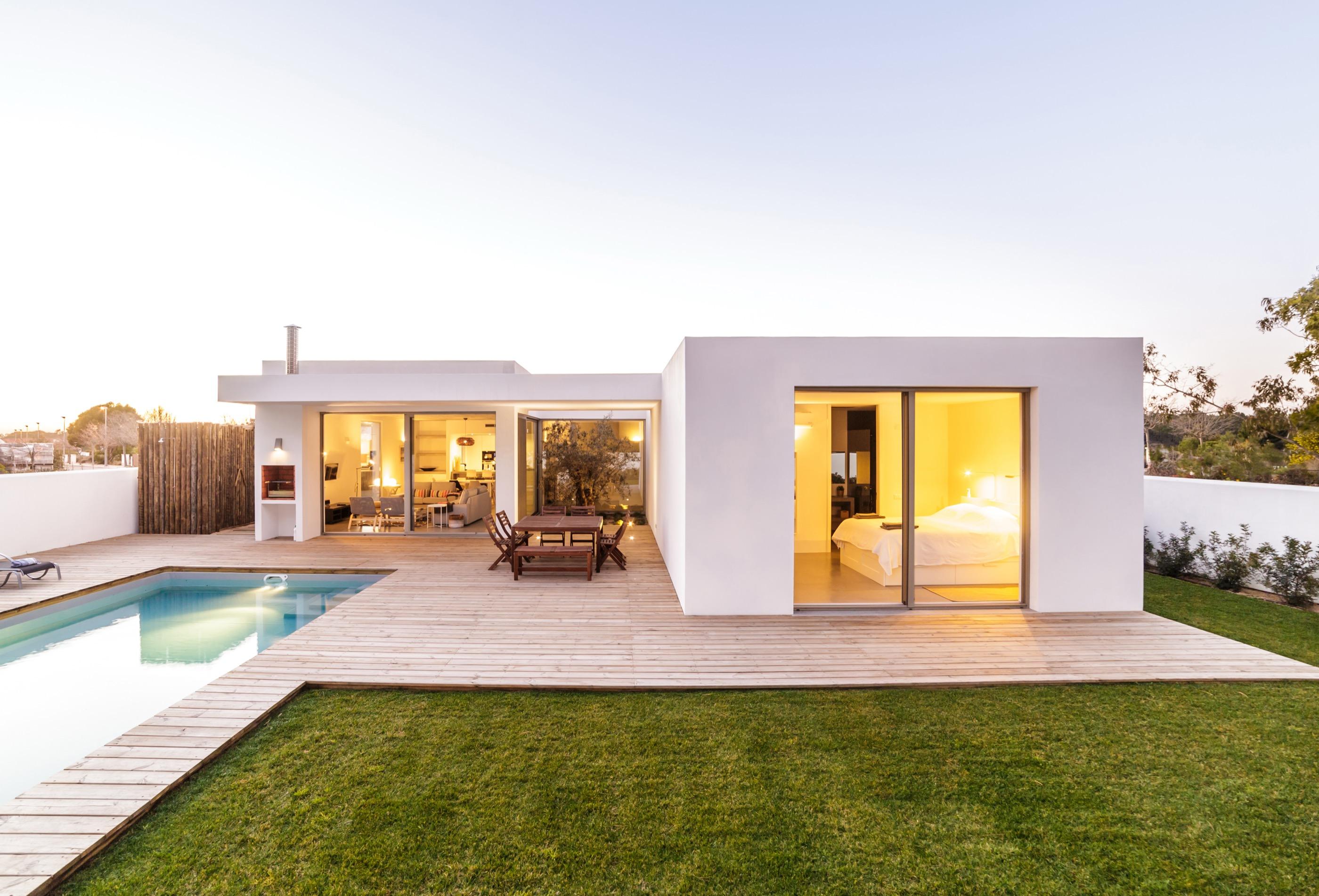
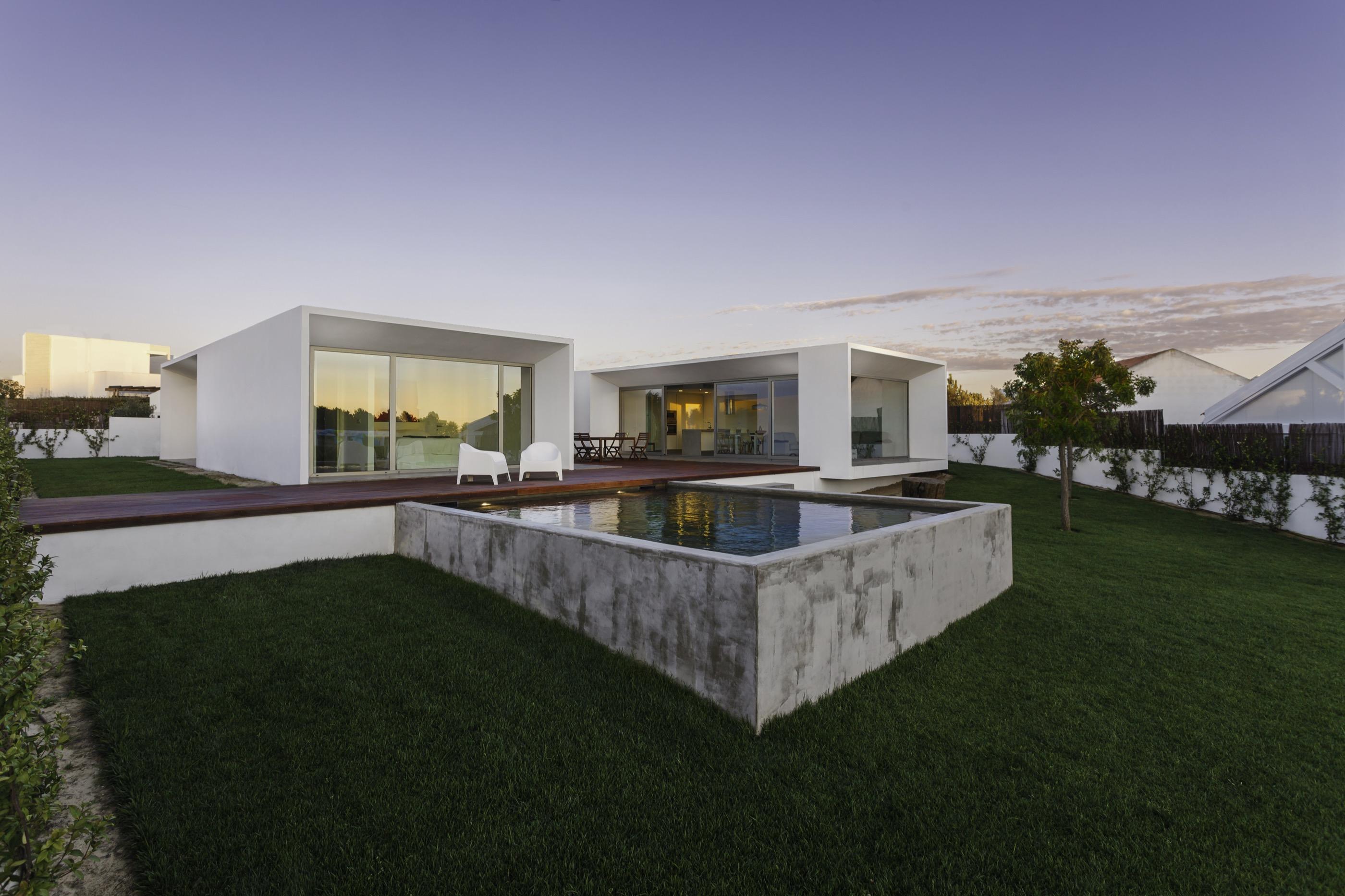
Building a timber house in Valencia is not the same as building one in Asturias, and not as a matter of taste: the climate zone imposed by the Spanish Building Code changes, so does the termite risk, the way the permit is processed and even the order in which the design should be resolved.
This guide covers what genuinely changes in the Valencia region. What does not change — national fire regulations, the warranties of Spanish building law, the construction system — is in our guide on fire, damp and durability.
Climate rules here: the problem is summer
The Building Code divides Spain into climate zones with a letter for winter and a number for summer. Valencia city is B3; Castellón, B3; Alicante, B4. The letter B means mild winters. The 3 and the 4 mean hard summers.
And there is a detail that escapes almost every design: the zone changes with altitude within the same province. In Valencia, below 50 metres above sea level it is B3; between 51 and 500 metres it becomes C3; above 500, D2. A plot in Chiva or Llíria is not in the same climate zone as one in Alboraya, and that changes the insulation thicknesses the regulation requires.
The practical consequence: here insulation is not calculated to keep the cold out, it is calculated to keep the heat out. And the two are not solved the same way.
What actually works in a Mediterranean climate
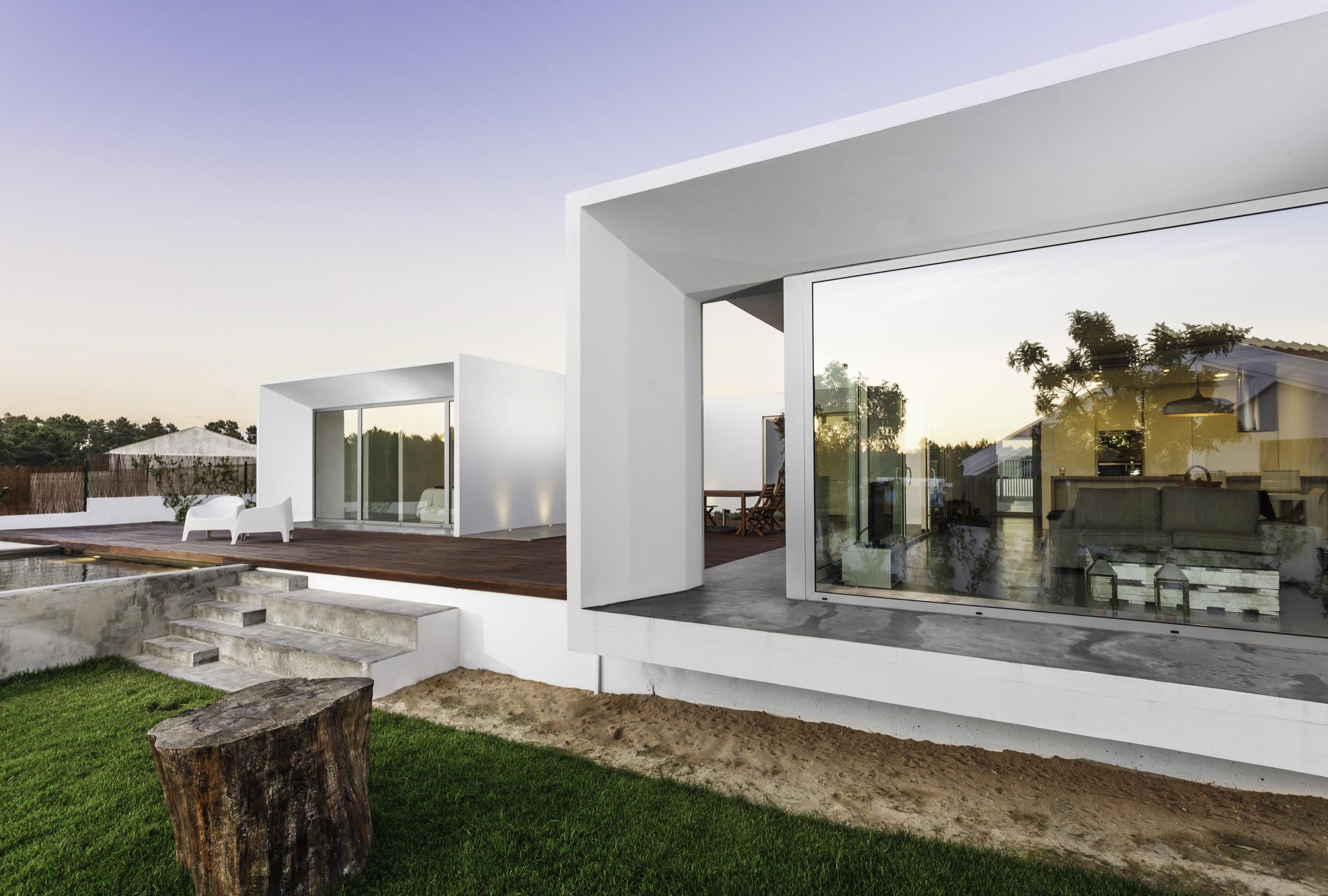
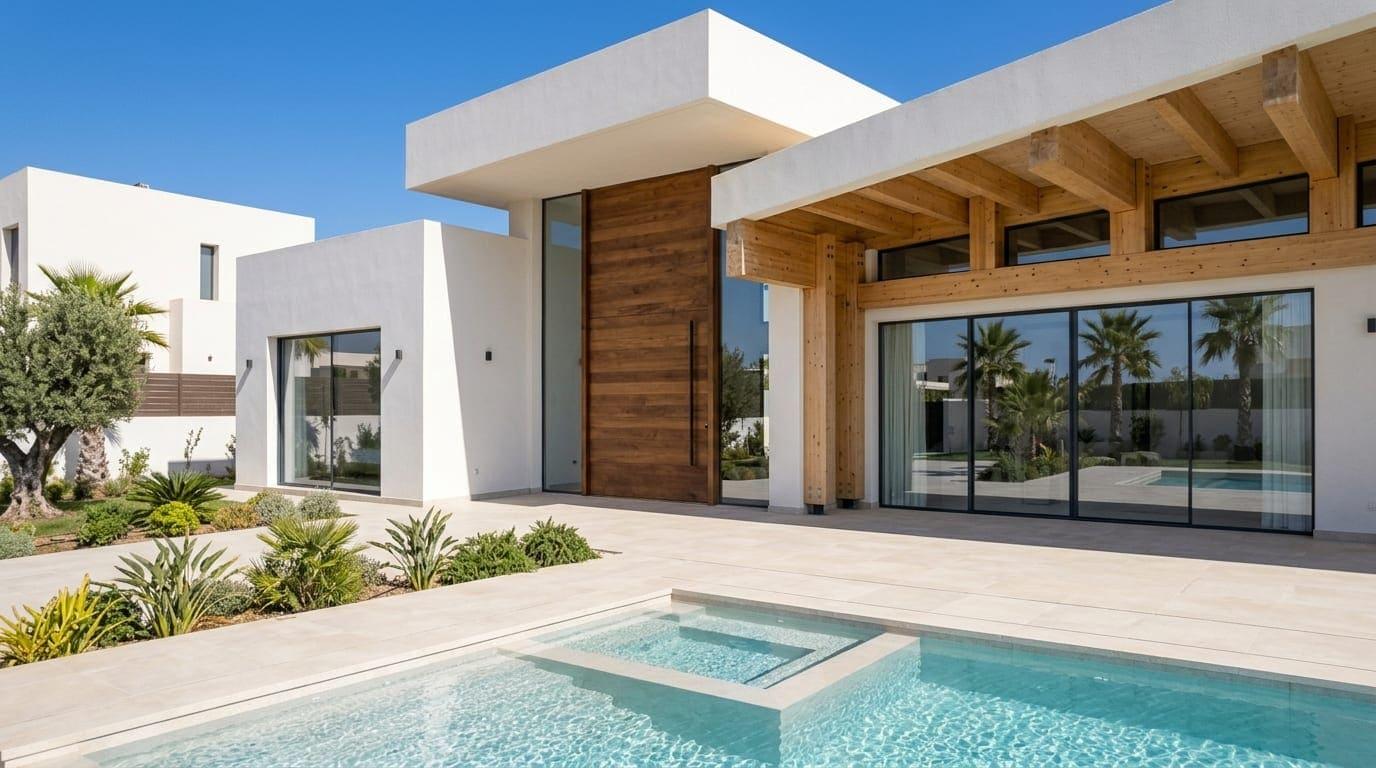
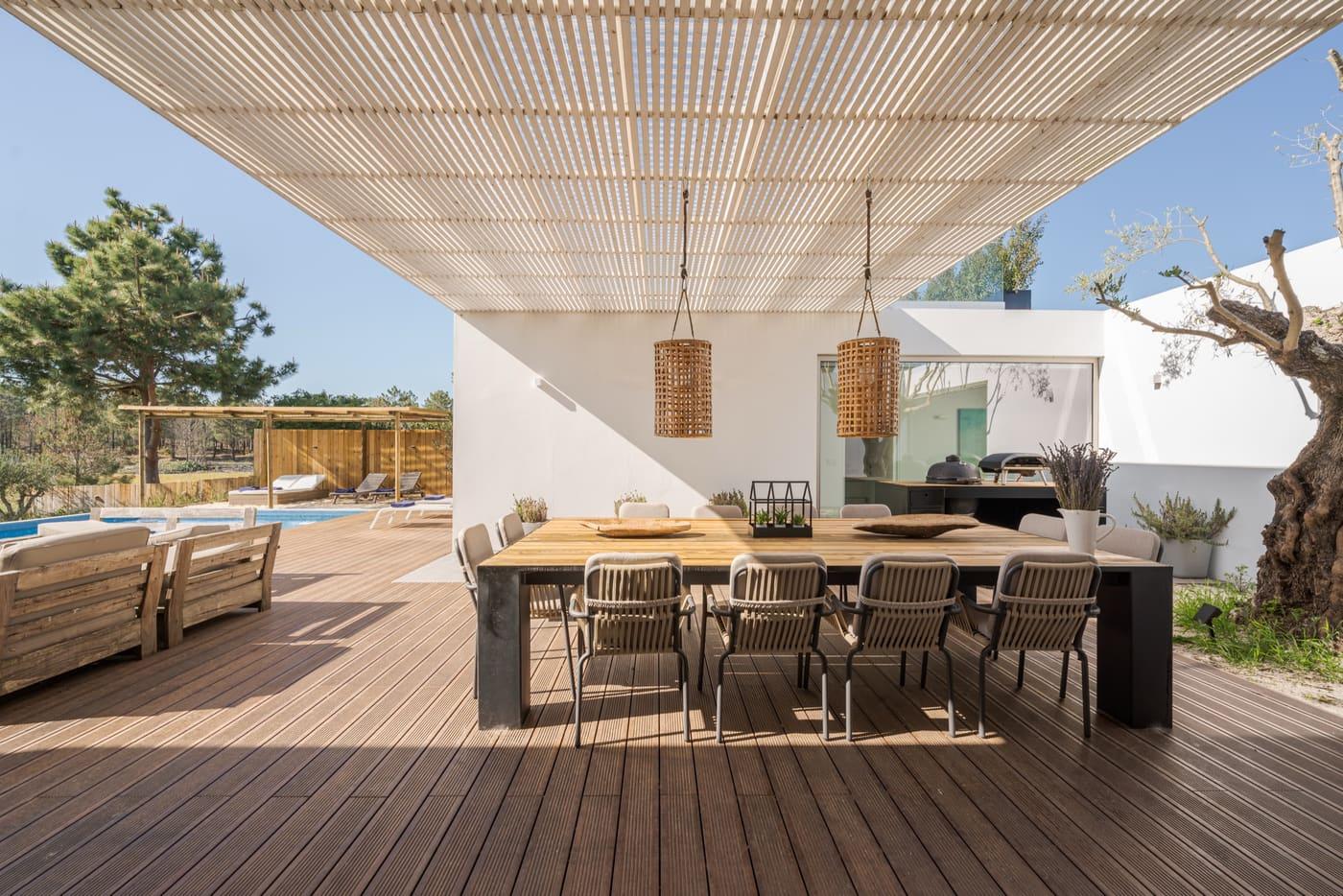
- Shade before machinery. A porch, an overhang or a well-sized pergola over the south façade keeps out more heat than any air conditioning unit. August sun comes in high: a short overhang stops it. Winter sun comes in low: under that same overhang, warming the house.
- Solar protection on the opening, outside. An external blind or louvre stops radiation before it crosses the glass. Inside, by the time the curtain heats up, the heat is already in the house.
- Cross night ventilation. On the Mediterranean coast, summer nights cool down enough to discharge the house if there are facing openings to allow it. That is decided on the layout drawing, not afterwards.
- Thermal mass where it counts. Dry construction is light, and light means it heats and cools quickly. A floor with mass or a heavy internal wall at the right point stabilises the temperature without giving up the system.
Termites: the subject worth facing
The Levante is subterranean termite territory. Worth saying plainly, and worth saying the second part too: it is solved in the design, not by luck. What a plot here requires:
- A physical or physico-chemical barrier at ground contact, resolved under the slab and around the perimeter before anything goes up.
- Pressure-treated timber to the use class each element calls for, according to its exposure.
- A plinth separating the structure from the ground and access points allowing inspection.
It is exactly the same problem faced by the timber joists of an old brick building in central Valencia. The difference is that in new build it is decided in advance.
The permit: Valencian planning law and how long it really takes
Valencian planning is governed by LOTUP — Law 5/2014 on Territorial Planning, Urbanism and Landscape — reformed by Law 1/2019, which widened the use of the responsible declaration to speed up procedures.
Precision matters here, because this is where most confusion arises:
- New residential construction still requires a permit. The responsible declaration covers refurbishments, minor works and, in this region, first occupancy too: that is a genuine change, because it allows the home to be occupied without waiting for the municipal decision.
- The maximum legal resolution period is three months. The real period seen in Valencian councils runs from four to nine months, depending on the municipality and on how complete the file is when submitted.
- Administrative silence does not grant planning permits. No reply means no permit: Spanish land law says so expressly.

Before buying the plot
Three checks that avoid concrete trouble here:
- That it is a serviced plot, not rural land. In the huerta and around many municipalities in the metropolitan area there are beautiful plots where housing cannot be built. Without serviced-plot status there is also no self-build mortgage available.
- Restrictions. Highways, watercourses under the Júcar water authority, drovers' roads, coastal easements on the shoreline and heritage settings in historic centres. Each one adds a sectoral report and one to three months.
- Altitude. For the reason above: it determines the climate zone, and with it the insulation and the budget.
Frequently asked questions
Does a timber house cope with a Valencian summer?
Yes, and usually better than an unrenovated conventional home: the insulation is built into the wall and can be taken to high thicknesses without losing floor area. What makes the difference is not the structural material but solar protection and night ventilation.
Is damp a problem near the sea?
High ambient humidity does not rot a well-resolved structure: what rots it is liquid water trapped without ventilation. A ventilated façade, a plinth separating it from the ground and a correctly placed vapour barrier solve the coast as well as the interior.
How long does a permit take in a Valencian municipality?
The legal period is three months; the norm is four to nine. The difference is made by sectoral reports and by submitting a complete file first time.
Can a timber house be built on rural land?
The material is irrelevant: planning decides. On non-developable land housing is heavily restricted and requires, where possible at all, a declaration of community interest or other specific procedures.
Do you work across the whole Valencia region?
We build across Spain, and the Levante is one of the areas where this system makes most sense because of how it behaves in summer. Write to us with the plot location and we will tell you what it conditions in your case.
Next step
If you already have a plot in Valencia, Castellón or Alicante, the useful move is not asking for prices: it is first checking what the planning rules allow there and which climate zone you are in. That is what we do in the first meeting — see how we work or book a meeting.