An ordinary mortgage is granted on a house that exists, that the bank can value, visit and, if it comes to it, repossess. In a self-build there is no house: there is a plot and a set of drawings. That is why the Spanish self-build mortgage works differently, and why it is worth understanding before buying the land rather than after.
The short answer: banks lend around 80 % of the appraised value of the finished home — not of the construction budget — they release it in stages as the build progresses, and they require the plot to be yours already and free of charges.
The difference that explains everything: they appraise what does not exist yet
An approved valuer appraises the finished property from the stamped design and the specification document. That figure — the mortgage value — is what counts, not what the build costs.
It is a distinction that changes the numbers. If the budgeted works come to €250,000 but the appraisal of the finished project gives €300,000, 80 % of the appraisal is €240,000: almost the whole build. If the appraisal gave €260,000, the same 80 % would be €208,000 and you would be €42,000 short.
Hence the first practical piece of advice: get the appraisal before signing anything. It is what turns a conversation with the bank into a number.
How the money arrives: site certificates
Not in one go. The loan is released in tranches, and each tranche is unlocked by a document signed by the supervising architect certifying which part of the works is complete. The usual split:
- Plot tranche, on signing: if the land is still being paid for, part of the loan goes there. Many banks will not finance it and require the plot to be yours already.
- Construction tranches, 50 % to 70 % of the total, across three or four certificates: foundations and structure, envelope and roof, services, finishes.
- Final tranche, 10 % to 20 %, released when the bank receives the completion certificate and the first-occupancy licence.
Two consequences people discover late: during construction you pay interest only on what has been drawn, and the builder is paid after certifying, not before. If your construction contract requires advance payments while your mortgage pays on certification, you have a cash-flow gap that needs resolving on paper, not as you go.
What they will ask you for
- The plot owned outright, free of charges and registered in your name. Urban or developable land qualifying as a serviced plot: if it is rural land, no self-build mortgage will apply.
- Design stamped by the architects' association and building permit granted. No permit, no money.
- A closed budget and a contract with the builder.
- Decennial insurance, compulsory under Spanish building law for housing, plus all-risks construction insurance.
- Own savings: 30 % to 40 % of the total investment across plot, taxes and the share of the build the appraisal does not cover.
Five mistakes that sink it
1. Buying the plot without checking it qualifies as a serviced plot
This is the expensive one. A plot with a beautiful view that is not legally serviced land — no connections, no consolidated development — will not finance, cannot simply be built on, and sits in your assets as frozen savings.
2. Treating the appraisal as if it were the budget
Confusing "they lend me 80 %" with "they lend me 80 % of what it costs" is the most repeated misunderstanding. The 80 % is on the appraisal.
3. Forgetting VAT
Construction carries 10 % VAT that is usually not included in the financing. On a €250,000 build that is €25,000 in cash you need to have.
4. Starting work before signing
If the bank arrives and the structure is already up, what is built does not count as works pending certification: you end up financing less than you expected.
5. A budget that is not a budget
A one-page document with unpriced items is no use to the bank or to you. What is needed is a specification with brands and models and a closed budget by chapters.
What changes if you build dry
Two things, and both work in your favour with a bank:
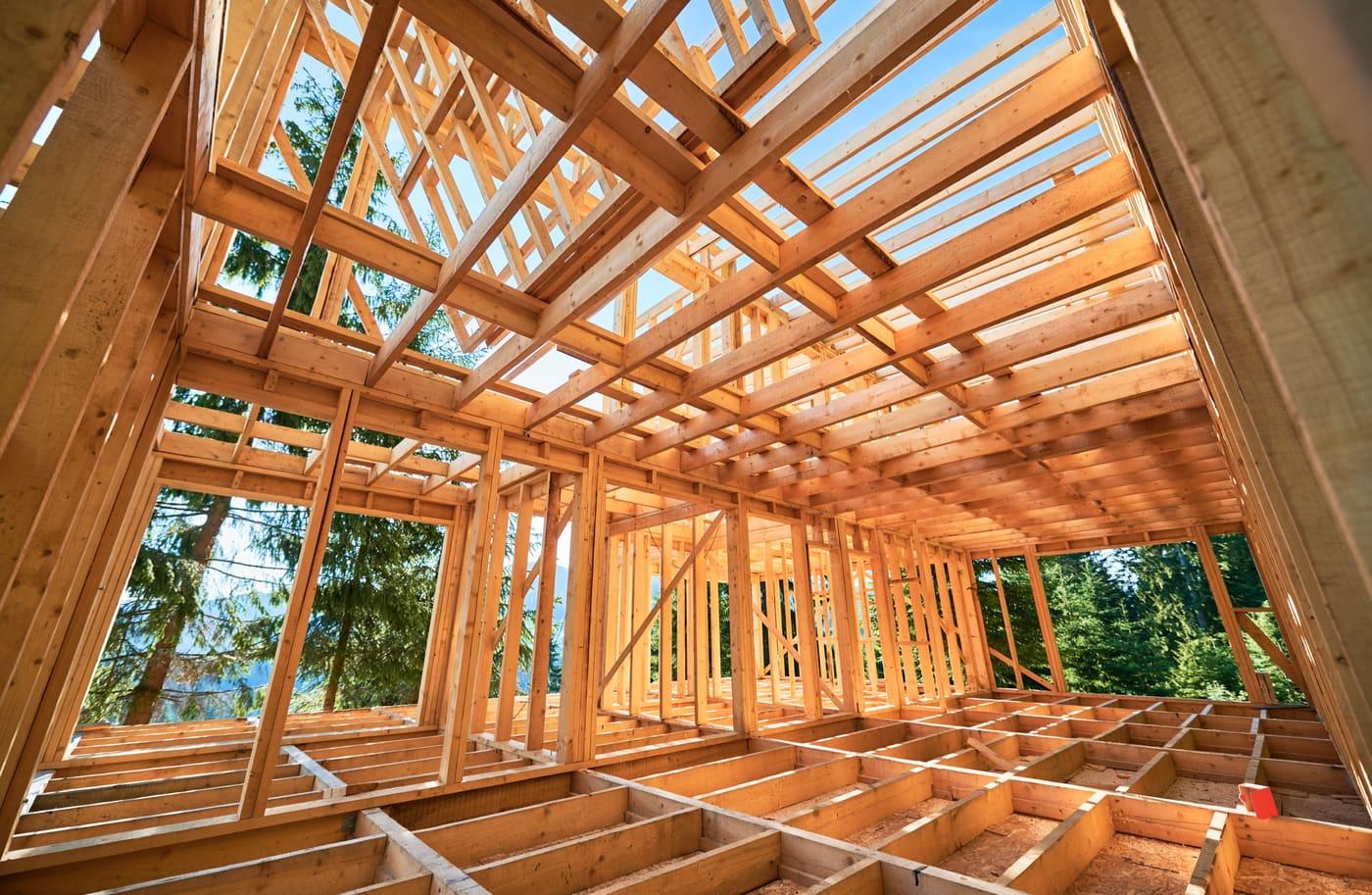
The calendar is shorter and firmer. Fewer months of construction means fewer months paying interest and rent at the same time. And a build that does not depend on concrete curing drifts less from the agreed programme.
The closed budget is credible. A system where components are cut to size before being assembled leaves far less room for variations, which is what turns a well-calculated loan into one that falls short.
Frequently asked questions
How much does a bank lend on a self-build mortgage?
Around 80 % of the appraised value of the finished home for a main residence, and about 60 % for a second home. Against the construction budget, real coverage usually lands between 70 % and 80 %.
Will they finance the land too?
Few lenders do. The norm is to require the plot already paid for, free of charges and registered in your name: it is the security the mortgage is constituted on.
How much do I need saved?
Count on the plot plus 30-40 % of the rest of the investment: the share of the build the appraisal does not cover, VAT, taxes, notary, land registry, design and permit.
Can I apply without the permit?
You can start the assessment, but not sign. A granted permit and a stamped design are requirements to complete: without them the bank has nothing to appraise and no certainty the works are lawful.
What if the build gets more expensive halfway?
The loan is closed: an extension is a new operation, with its own costs and approval. That is why a closed budget and a predictable construction system are worth more here than a low price per square metre.
How we help with this
We are not a bank and we do not sell mortgages. What we do is give you what the bank will ask for: design, a closed budget by chapters and a calendar with dates, which is what turns an application into an approval. See how we work, read the specification document — the document that accompanies the appraisal — or write to us with your plot in front of you.